What Is Custom Remittance Software? A Complete Guide for Money Transfer Businesses
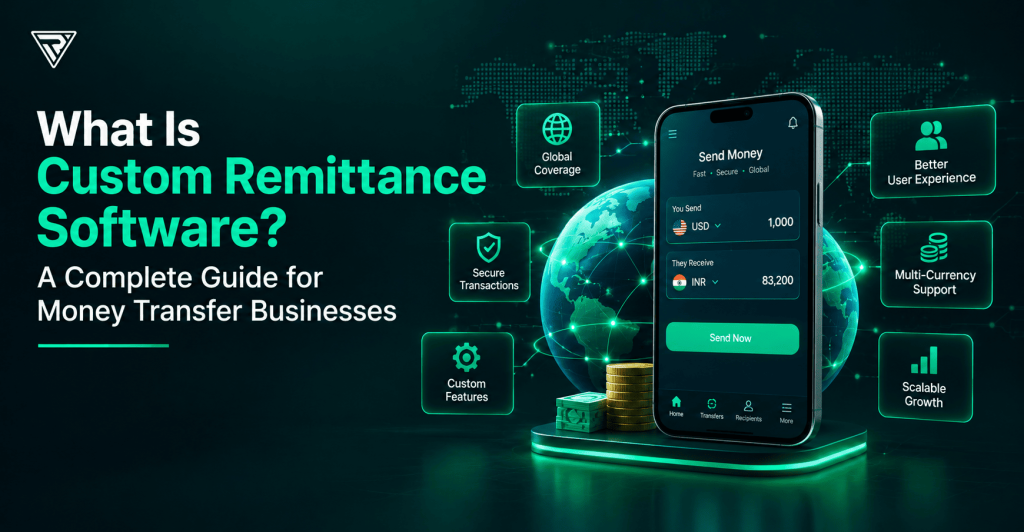
The global money transfer industry is evolving as customers expect faster transactions, secure payment processing, transparent fees, and convenient digital experiences. For businesses looking to enter or expand in this market, custom remittance software provides the technology needed to manage international money transfers and streamline daily operations.
Unlike generic payment solutions, custom remittance software can be developed around a business’s specific operational requirements, target markets, currencies, payment methods, and compliance processes. It gives money transfer operators, fintech companies, and remittance businesses greater flexibility to build and manage their services.
In this guide, we explain what custom remittance software is, how it works, its key features, its benefits, and why choosing the right technology provider matters.
What Is Custom Remittance Software?
Custom remittance software is a purpose-built technology platform designed to help businesses manage domestic and international money transfers. It supports essential processes such as customer registration, identity verification, transaction processing, currency conversion, payment integration, transfer tracking, and reporting.
Unlike ready-made solutions with predefined functionality, custom remittance software can be tailored to a company’s business model and operational workflow. Businesses can choose the features they need, integrate their preferred payment providers, and build functionality around their target customer base.
For example, a remittance business serving customers who send money from Australia to Nepal may require Australian dollar transactions, Nepalese rupee payouts, bank transfers, mobile wallet integrations, and real-time transaction updates. Custom software can be designed to support these requirements, subject to the capabilities of connected providers and applicable regulations.
How Does Custom Remittance Software Work?
Custom remittance software connects different stages of a money transfer through a centralized platform. Although the exact process varies by business, a typical workflow includes the following steps.
- Customer Registration: Customers create an account and provide the information required by the business.
- Identity Verification: The platform integrates with appropriate verification services to support Know Your Customer (KYC) procedures.
- Transfer Initiation: Customers enter the recipient’s details, select the destination country, and specify the amount they want to send.
- Exchange Rate and Fee Calculation: The system displays the applicable exchange rate, transfer fees, and estimated recipient amount based on configured rules and provider data.
- Payment Processing: The sender completes the payment using an available payment method.
- Transaction Processing and Payout: The software coordinates with connected payment networks, banks, or payout providers to process the transfer.
- Tracking and Reporting: Customers can check transaction status, while administrators can monitor transfers and access operational reports.
This integrated workflow helps remittance businesses manage transactions more efficiently while improving visibility across the transfer process.
What Features Should Custom Remittance Software Include?
The right feature set depends on the business model, target countries, transaction volumes, and operational needs. However, several capabilities are particularly valuable when developing custom remittance software.
Customer Management and Onboarding
Customer registration and onboarding tools help businesses collect required information, manage customer profiles, and organize verification workflows. A simple onboarding experience can reduce friction for new customers while supporting the business’s compliance procedures.
Multi-Currency and Exchange Rate Management
For international transfers, the platform should support relevant sending and receiving currencies. Exchange rate management functionality can display current rates from configured sources, calculate recipient amounts, and apply defined fees or margins where permitted.
Payment Gateway Integration
Payment gateway integration allows the platform to connect with supported payment providers. Depending on the business’s requirements, this may include card payments, bank transfers, and other locally available payment methods.
KYC and AML Support
Custom remittance software can integrate identity verification, transaction monitoring, screening, and reporting workflows to support Know Your Customer (KYC) and Anti-Money Laundering (AML) obligations. Actual compliance depends on the business’s licensing, jurisdictions, policies, and implementation.
Transaction Tracking
Customers and administrators need visibility into transfer progress. Transaction tracking tools can display statuses, record transaction history, and send notifications when relevant updates occur.
Admin Dashboard and Reporting
A centralized dashboard helps administrators review transactions, manage customers, monitor operational activity, and generate reports. Role-based access can also help restrict sensitive information and administrative functions to authorized users.
API and Third-Party Integrations
APIs enable the software to connect with banking partners, payment gateways, identity verification providers, and payout networks. These integrations help businesses build a connected remittance ecosystem around their operational requirements.
What Are the Benefits of Custom Remittance Software?
Investing in custom remittance software can offer several advantages for businesses that want greater control over their money transfer operations.
- Business-specific functionality: The platform can be designed around specific transaction workflows, target markets, and customer requirements.
- Operational efficiency: Automation can reduce repetitive manual tasks and help teams manage transactions more consistently.
- Scalability: A well-designed system can be expanded with additional currencies, corridors, integrations, and features as the business grows.
- Improved customer experience: Digital onboarding, transparent transfer details, transaction tracking, and timely notifications can make the transfer process easier to navigate.
- Integration flexibility: Businesses can connect the platform with compatible third-party services rather than relying entirely on a fixed set of built-in integrations.
- Better operational visibility: Centralized reporting and transaction records help teams review activity and make informed operational decisions.
The actual results depend on the platform’s design, implementation quality, integrations, and business processes.
Custom Remittance Software vs Ready-Made Remittance Software
Businesses often need to decide whether to purchase a ready-made platform or invest in custom remittance software.
Ready-made solutions can be suitable for businesses whose requirements closely match the available product. They may offer a quicker implementation path, but customization options and integration flexibility can vary.
Custom remittance software is more suitable when a business needs specific workflows, tailored customer experiences, specialized integrations, or greater control over future development.
Before deciding, evaluate the total development or licensing cost, implementation timeline, maintenance requirements, security controls, integration capabilities, and ongoing technical support.
For businesses seeking a faster route to market without developing every component from scratch, a customizable white-label remittance platform may also be worth considering.
How Much Does Custom Remittance Software Cost?
The cost of custom remittance software depends on the required functionality, platform complexity, integrations, supported currencies, security requirements, and development timeline.
A platform with customer onboarding, transaction management, an admin dashboard, and basic reporting will generally require a different level of investment from an enterprise system with multiple payout networks, automated reconciliation, advanced monitoring, and extensive API integrations.
Businesses should also account for hosting, maintenance, third-party service charges, testing, future upgrades, and compliance-related expenses when calculating the total cost of ownership.
The best approach is to define your business requirements first and request a detailed proposal that explains the scope, deliverables, integrations, and ongoing support.
Why Choose Tech Remit for Custom Remittance Software?
Choosing a technology partner is an important step when building a money transfer business. You need a platform that aligns with your operational goals, supports your required integrations, and can evolve as your business expands.
Tech Remit provides remittance software solutions for businesses looking to establish or improve their digital money transfer operations.
Here’s how Tech Remit can support your business:
- Customised solutions: Explore software tailored to your business workflows and operational requirements.
- White-label options: Build a remittance service around a platform that can be adapted to your brand and requirements.
- Multi-currency capabilities: Support relevant sending and receiving currencies based on your target markets and integration needs.
- Payment integrations: Connect compatible payment and payout providers to support your transfer workflows.
- KYC and AML functionality: Implement verification and monitoring capabilities appropriate to your business and compliance requirements.
- Transaction management: Manage transfers, customer information, and operational activity through centralized software.
- Scalable development: Plan for additional features, integrations, and market expansion as your requirements evolve.
With a focus on remittance technology, Tech Remit can help businesses evaluate the software capabilities needed to support their money transfer operations.
Build Your Remittance Business with Tech Remit
Custom remittance software can provide the foundation for managing international money transfers, integrating payment services, streamlining workflows, and delivering a convenient digital experience to customers. Selecting the right platform starts with understanding your business model, target markets, technical requirements, and long-term growth plans.
If you’re planning to launch a new remittance service or upgrade an existing money transfer operation, Tech Remit can help you explore suitable software options for your business.
Visit https://techremit.net/ to learn more about remittance software solutions and discuss your requirements.
Recommended Read: How Can Remittance Software Help Money Transfer Businesses Scale Globally?